

Hey there! As a supplier for Special Vehicle Garages, I've seen firsthand how important it is to have a well - labeled storage area. You know, a Special Vehicle Garage isn't your regular parking spot. It's a place where all sorts of unique vehicles are stored, maintained, and readied for action. Whether it's military vehicles, high - tech emergency response rigs, or custom - built machines, proper labeling can make a world of difference.
First off, let's talk about why labeling is such a big deal. In a Special Vehicle Garage, time is often of the essence. When an emergency call comes in or it's time for a vehicle to be deployed, you don't want your team wasting precious minutes searching for tools, spare parts, or even the vehicle itself. A clear labeling system can significantly boost efficiency, reduce errors, and enhance safety.
One of the best ways to start labeling is by using a color - coding system. You can assign different colors to different types of storage areas. For example, red could be for high - priority emergency equipment, like first - aid kits and fire extinguishers. Yellow might be for tools that are frequently used for vehicle maintenance, such as wrenches and screwdrivers. Blue could represent spare parts that are specific to certain vehicles. This color - coding makes it easy for anyone walking into the garage to quickly identify what they're looking for.
Another great approach is to use large, bold signs. You can install these signs above storage racks, cabinets, and even on the walls near specific areas. Make sure the text is easy to read from a distance. For instance, if you have a section dedicated to storing fuel canisters, put up a sign that says "Fuel Canisters" in big letters. You can also add a brief description, like "For diesel - powered vehicles" to avoid any confusion.
Digital labeling is also becoming increasingly popular. With digital labels, you can easily update information as needed. For example, if you change the location of a particular spare part, you can just edit the digital label. You can use QR codes on these labels too. When scanned with a smartphone or a dedicated scanner, the QR code can provide detailed information about the item, such as its specifications, purchase date, and maintenance history.

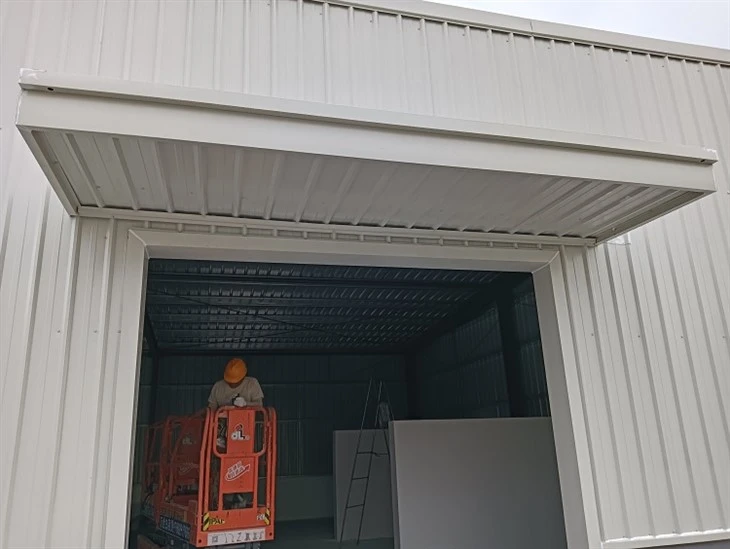
Now, let's think about the layout of the garage. You should label areas based on the flow of work. Start by dividing the garage into zones, like the vehicle storage zone, the maintenance zone, and the supply storage zone. In the vehicle storage zone, you can label each parking spot with the name or number of the vehicle that usually parks there. This helps in quickly identifying which vehicle is missing or if there's an unauthorized vehicle parked in a spot.
In the maintenance zone, label workbenches according to the type of work that's typically done there. One bench could be labeled "Engine Repair," another "Bodywork," and so on. This way, mechanics know exactly where to go to find the right tools and equipment for their job.
The supply storage zone is crucial. Here, you can use a hierarchical labeling system. Start with broad categories, like "Tires," "Batteries," and "Lubricants." Then, break these down further. For example, under "Tires," you can have sub - labels for different sizes and types, such as "18 - inch All - Terrain Tires" or "20 - inch Winter Tires."
Let's not forget about safety labeling. Make sure to clearly mark areas that are off - limits or dangerous. For example, if there's a section of the garage where high - voltage electrical equipment is stored, put up a sign that says "High Voltage - Do Not Enter." You can also use safety symbols along with the text to make the message even clearer.
When it comes to labeling individual items, use tags. You can attach these tags to tools, spare parts, and even small equipment. The tags should include basic information like the item's name, its location in the garage, and any special instructions. For example, if you have a delicate sensor, the tag could say "Handle with Care" along with its name and storage location.
Now, I'd like to mention some related types of garages. If you're interested in other types of storage facilities, you might want to check out Aircraft Hangar. It's a specialized space for storing aircraft and has its own unique labeling requirements. Also, Base Garage is another option, which is often used for storing a variety of vehicles in a military or large - scale operation setting. And of course, our own Special Vehicle Garage is designed to meet the specific needs of storing and maintaining special vehicles.
If you're in the market for a Special Vehicle Garage or need advice on how to label your existing storage areas, we're here to help. We've got years of experience in providing top - notch solutions for all your garage needs. Whether you're a small business looking to organize your emergency response vehicles or a large military base in need of a comprehensive storage system, we can offer the right products and services. Reach out to us to start a conversation about your requirements. We're eager to work with you to create a well - labeled, efficient Special Vehicle Garage.
References
- "Garage Organization Best Practices" - Industry Handbook on Garage Management
- "The Importance of Labeling in Industrial Settings" - Journal of Industrial Efficiency